Ontvang een e-mail bij een prijsdaling tot onder je gewenste prijs.
Je ontvangt een e-mail wanneer de prijs daalt.
We volgen de prijsontwikkeling van dit product op bol.com (Nederland).
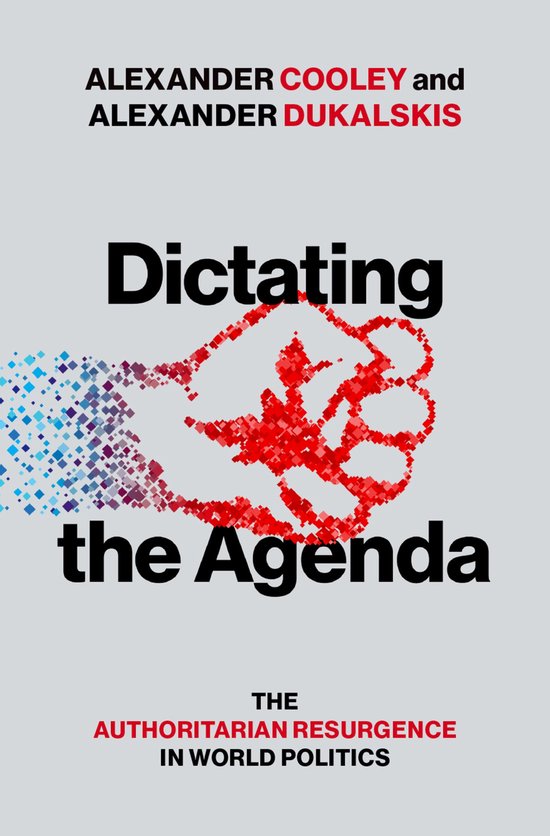
This is a story not just of the limits of liberal influence across the world, but of how authoritarian governments came to dictate the global agenda by repurposing the very actors, tools, and norms that once afforded US-backed liberalism such global prominence. Following the end of the Cold War, the world experienced a remarkable wave of democratization. Over the next two decades, numerous authoritarian regimes transitioned to democracies, and it seemed that authoritarianism as a political model was fading. But as recent events have shown, things have clearly changed. In Dictating the Agenda, authors Alexander Cooley and Alexander Dukalskis reveal how today's authoritarian states are actively countering liberal ideas and advocacy surrounding human rights and democracy across various global governance domains. The transformed global context has unlocked for authoritarian states the possibility to contend with Western liberal soft power in new, traditionally "non-political" ways, including by plugging or even reversing the very channels of influence that originally spread liberalism. Cooley and Dukalskis ultimately advance a theory of authoritarian snapback, the process in which non-democratic states limit the transnational resonance of liberal ideas at home and advance anti-liberal norms and ideas into the global public sphere. Drawing from a range of evidence, including field work interviews and comparative case studies that demonstrate the changing nature of consumer boycotts, a database of authoritarian government administrative actions against foreign journalists, a database of global content-sharing agreement involving Chinese and Russian state media, and a database of transnational higher education partnerships involving authoritarian and democratic countries, this book doesn't just reveal the limits of the liberal influence taken for granted across the world. It offers a novel theory of how authoritarian governments figured out how to exploit and repurpose the same actors, tools, and norms that once exclusively promoted and sustained US-backed liberalism.
Bekijk ook eens deze gerelateerde producten.