Ontvang een e-mail bij een prijsdaling tot onder je gewenste prijs.
Je ontvangt een e-mail wanneer de prijs daalt.
We volgen de prijsontwikkeling van dit product op bol.com (Nederland).
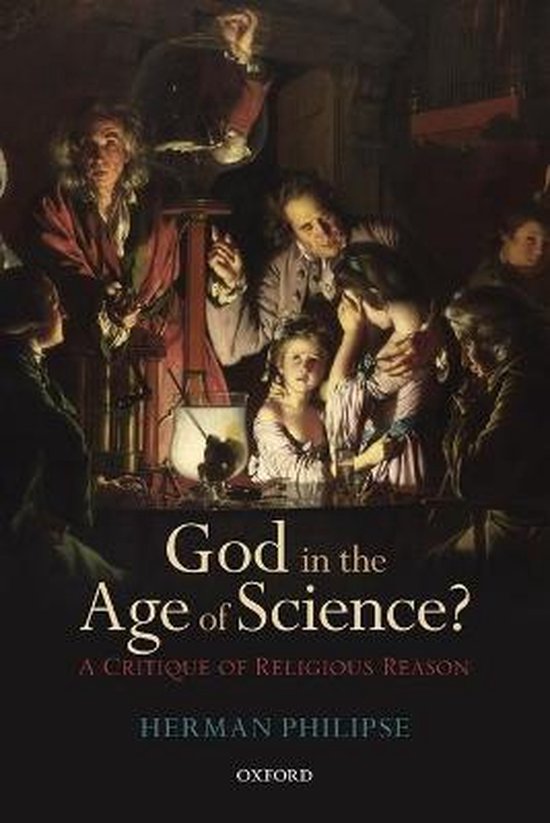
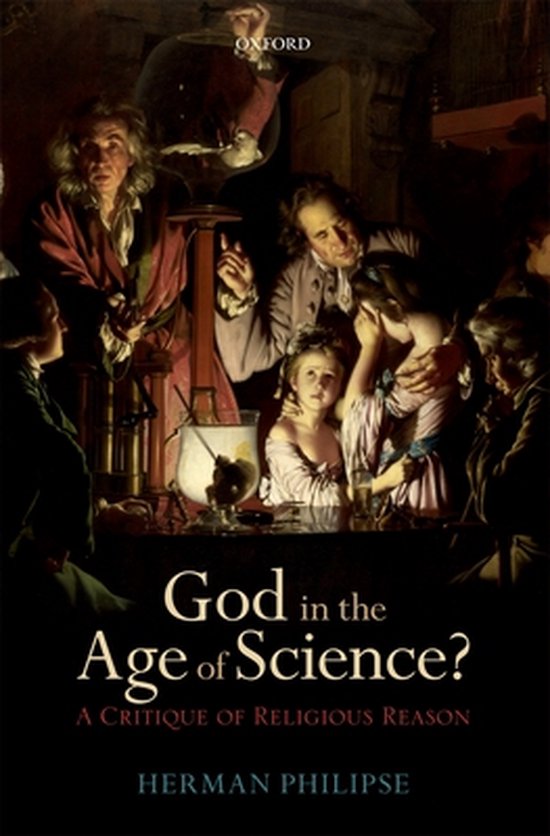
Herman Philipse puts forward a powerful new critique of belief in God. He examines the strategies that have been used for the philosophical defence of religious belief, and by careful reasoning casts doubt on the legitimacy of relying on faith instead of evidence, and on probabilistic arguments for the existence of God.
God in the Age of Science? is a critical examination of strategies for the philosophical defence of religious belief. The main options may be presented as the end nodes of a decision tree for religious believers. The faithful can interpret a creedal statement (e.g. 'God exists') either as a truth claim, or otherwise. If it is a truth claim, they can either be warranted to endorse it without evidence, or not. Finally, if evidence is needed, should its evidential support be assessed by the same logical criteria that we use in evaluating evidence in science, or not? Each of these options has been defended by prominent analytic philosophers of religion. In part I Herman Philipse assesses these options and argues that the most promising for believers who want to be justified in accepting their creed in our scientific age is the Bayesian cumulative case strategy developed by Richard Swinburne. Parts II and III are devoted to an in-depth analysis of this case for theism. Using a 'strategy of subsidiary arguments', Philipse concludes (1) that theism cannot be stated meaningfully; (2) that if theism were meaningful, it would have no predictive power concerning existing evidence, so that Bayesian arguments cannot get started; and (3) that if the Bayesian cumulative case strategy did work, one should conclude that atheism is more probable than theism. Philipse provides a careful, rigorous, and original critique of theism in the world today.
Bekijk ook eens deze gerelateerde producten.
Cambridge Studies in Religion, Philosophy, and Society- Reason and Religion

Do We Need God To Be Good? An Anthropologist Considers the Evidence
God In The Age Of Science?
God in the Age of Science?
Cambridge Studies in Religion, Philosophy, and Society- God and Truth
Atheïstisch manifest
