Boek
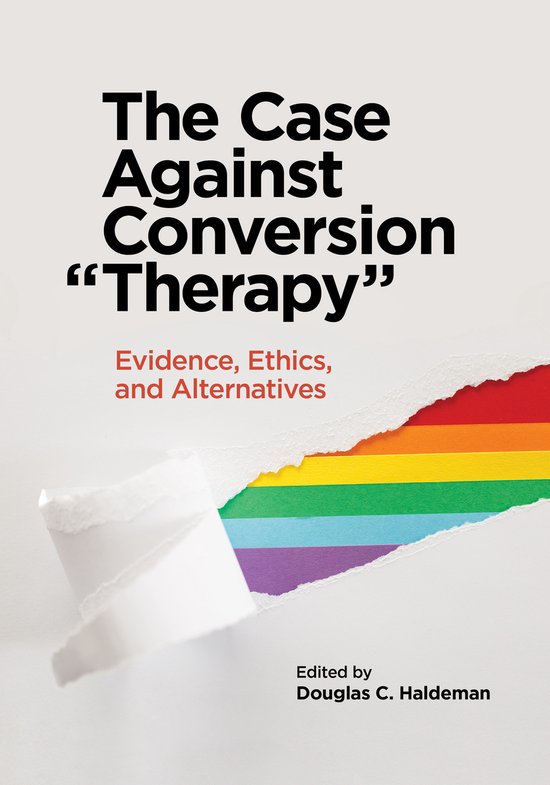
The Case Against Conversion "Therapy"
Huidige prijs op bol.com (Nederland)
€ 62,99
Bekijk op bol.com
Boek
Huidige prijs op bol.com (Nederland)
Ontvang een e-mail bij een prijsdaling tot onder je gewenste prijs.
Je ontvangt een e-mail wanneer de prijs daalt.
We volgen de prijsontwikkeling van dit product op bol.com (Nederland).
Analyzing decades of flawed practices, this investigation exposes how conversion therapy—disguised as sexual orientation and gender identity change efforts—has caused deep psychological harm to LGBTQ youth. It challenges these damaging methods while advocating supportive care that celebrates genuine identity.
Many LGBTQ youth are still forced into harmful amp ldquo treatments amp rdquo with devastating mental health consequences. This volume explores the history, effects, and danger of so-called conversion therapy.
Because conversion amp ldquo therapy amp rdquo is not actually therapeutic, it is now more accurately referred to as sexual orientation change efforts (SOCE) or gender identity change efforts (GICE). What does the record show about the efficacy and effects of SOCE and GICE? What motivates individuals to seek these harmful treatments, either for themselves or for their children? This book synthesizes findings from a vast literature base to answer these and other important questions, in hopes of fully discrediting SOCE and GICE once and for all.
Over the last four decades, considerable research has showed SOCE to be not only ineffective, but harmful. As a result of these findings, professional organizations such as the American Psychological Association (APA) have denounced the practice and recommended affirmative, supportive treatment instead. Although SOCE have been widely discredited, they remain legal in most states and continue to be practiced with lesbian, gay, and bisexual children and adolescents. Furthermore, as the past 2 years have seen an increase in gender nonconforming and transgender individuals, there has been a similar rise in efforts to socially reprogram gender nonconforming children and adolescents.
This volume is grounded in the principle long embraced by the scientific and healthcare communities-that same-sex attraction and gender nonconformity are not signs of psychopathology. Rather, sexual and gender minority individuals should be supported in embracing their own identities. This affirmative approach to practice with sexual and gender minorities is consistent with decades of APA policy and ethics.
Bekijk ook eens deze gerelateerde producten.