Ontvang een e-mail bij een prijsdaling tot onder je gewenste prijs.
Je ontvangt een e-mail wanneer de prijs daalt.
We volgen de prijsontwikkeling van dit product op bol.com (Nederland).
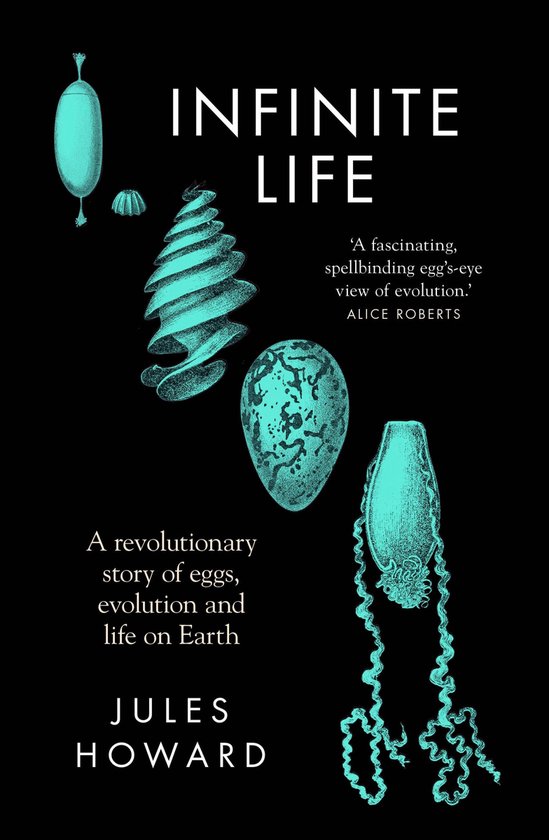
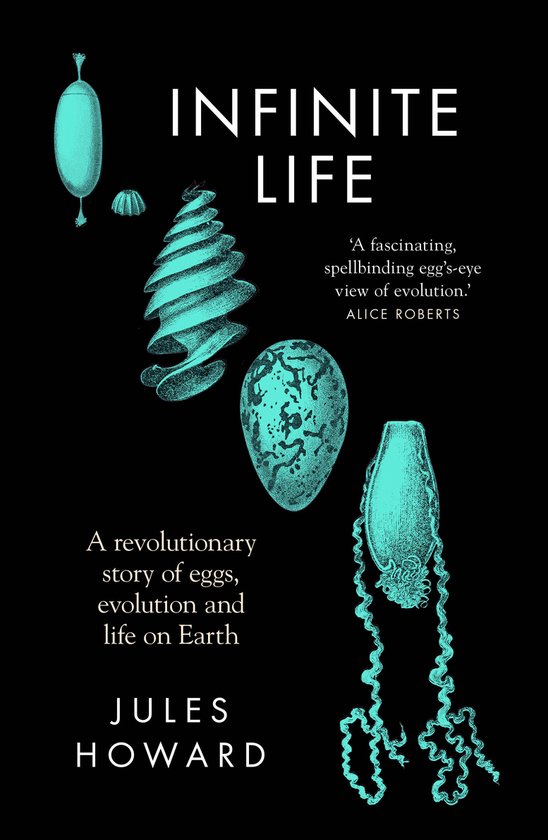
‘Jules Howard’s egg’s-eye view of evolution is dripping with fascinating insights’ ALICE ROBERTS
‘So much passion and poetic prose' BBC Radio 4, Inside Science
If you think of an egg, what do you see in your mind’s eye? A chicken egg, hard-boiled? A slimy mass of frogspawn? Perhaps you see a human egg cell, prepared on a microscope slide in a laboratory? Or the majestic marble-blue eggs of the blackbird?
Every egg there has ever been, is an emblem of survival. Yet the evolution of the animal egg is the dramatic subplot missing in many accounts of how life on Earth came to be. Quite simply, without this universal biological phenomenon, animals as we know them, including us, could not have evolved and flourished.
In Infinite Life, zoology correspondent Jules Howard takes the reader on a mind-bending journey from the churning coastlines of the Cambrian Period and Carboniferous coal forests, where insects were stirring, to the end of the age of dinosaurs when live-birthing mammals began their modern rise to power. Eggs would evolve from out of the sea; be set by animals into soils, sands, canyons and mudflats; be dropped in nests wrapped in silk; hung in stick nests in trees, covered in crystallised shells or secured by placentas.
‘In a book that brilliantly evokes past eras, Howard provides a new perspective on the history of life on Earth.’ The Mail on Sunday
Bekijk ook eens deze gerelateerde producten.