Ontvang een e-mail bij een prijsdaling tot onder je gewenste prijs.
Je ontvangt een e-mail wanneer de prijs daalt.
We volgen de prijsontwikkeling van dit product op bol.com (Nederland).
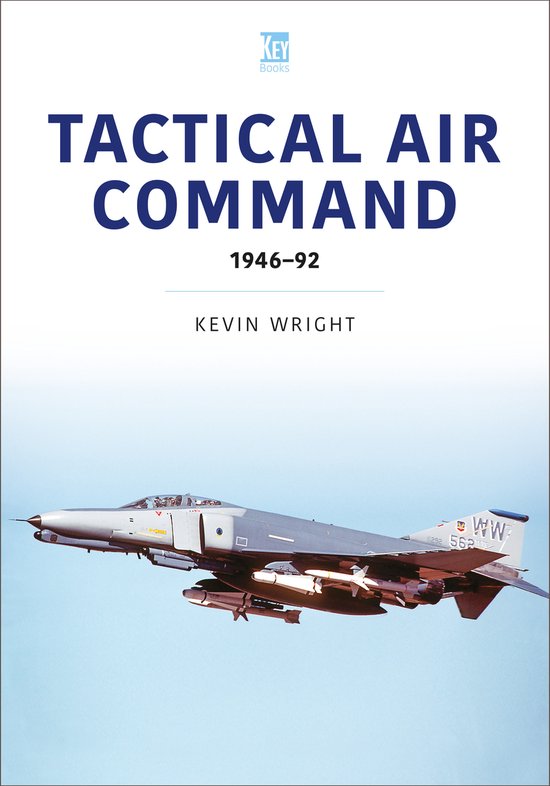
A history of Tactical Air Command.
TAC was the largest of the USAF’s major Cold War combatant commands. Formed in 1946 and headquartered at Langley AFB, Virginia, it operated a huge range of aircraft over the following 46 years until it was inactivated in 1992. In 1946, it was equipped with mainly World War Two aircraft types including P-47s and P-51s. It soon ushered into service jet aircraft operations with the P-80 and F-86. Within a few years, TAC was operating a wide range of tactical fighters, ground attack fighters, light bombers, tactical missiles, photographic reconnaissance and special mission aircraft (reconnaissance, special operations, and electronic warfare). TAC played a significant part in the Korean War, the Cuban missile crisis and later the wars in SE Asia and the Gulf in 1991. It came to operate a large number of tactical fighter and attack aircraft including the F-84, F-100 and F-105. As the 1960s progressed, they were joined by the A-7, F-111 and F-4 and, in the 1980s, supplemented by A-10s, F-15s and F-16s through to the end of the Cold War. In the run-up to any war with the USSR, Tactical Air Command was expected to deploy its combat airpower to USAF Commands in Europe and/or the Pacific. That deployment capability struggled during the 1970s. However, from 1978 to 1984, the strength and capability of TAC was transformed by its new commander, General Wilbur ‘Bill’ Creech. He organised, equipped and prepared his units (including ANG and AFRES elements) to deploy from the continental US to the frontline in Europe. Ready to fight and familiarized with their area of operations they could have joined the war immediately, drawing on pre-positioned weapons stocks. As the Soviet threat diminished towards the end of the 1980s, all TAC’s preparations, planning and capabilities were tested for real following the Iraqi invasion of Kuwait in August 1990. Suddenly sent to Middle East in the countries surrounding Iraq, those well tested plans saw TAC aircraft form a major part of all coalition air forces that took part in Operations Desert Shield and Desert Storm. In 1992, in a major USAF reorganisation TAC became Air Combat Command.
Bekijk ook eens deze gerelateerde producten.